
A breaker that keeps dropping is not a nuisance. It is your electrical system telling you something specific, and it is worth listening to. We find out which of the four possible causes you actually have, then fix it.
Nobody calls us because they love their panel. They call because the kitchen lost power during Thanksgiving prep, because the shop heater kicks the same breaker every January morning, or because a breaker got hot enough to smell. Whatever brought you here, the important thing to understand is that a breaker tripping is the one part of the story that went right.
Every trip is a report. It says the current on that branch exceeded what the conductor can carry safely, or that it found a path it should never have found. A breaker is a safety device, not a light switch, so our job is to read that report correctly instead of pushing the handle back and hoping. Silver Star Electric has been doing circuit breaker repair and wiring repair for Utah County families and businesses since 2008, and the difference between a lasting fix and a repeat call is almost always the quality of the diagnosis.
We look for the root cause, we explain what we found in language that makes sense, and you get the price before any work begins.
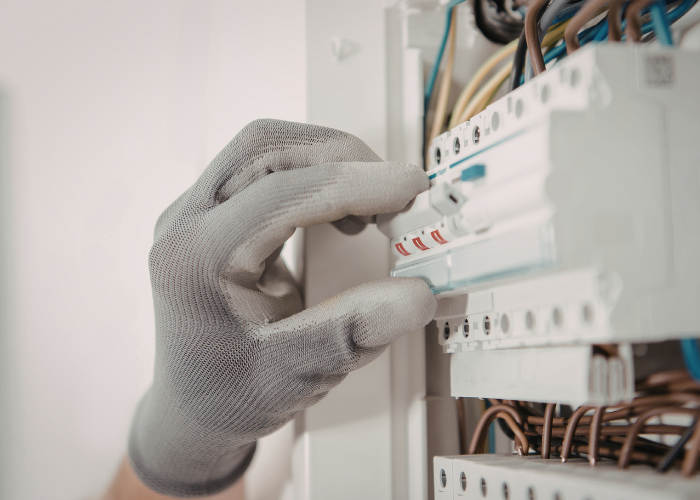
Inside that plastic handle are two separate protection mechanisms, and knowing which one fired tells us a lot.
The thermal element is a bimetal strip that bends as heat builds. A load slightly over the rating will warm it slowly, which is why an overloaded circuit often takes several minutes to trip. That delay is intentional. It lets a motor draw its startup surge without dropping the branch.
The magnetic element responds instantly to a massive spike in current. A short circuit, where a hot conductor meets a neutral or a ground with essentially no resistance, produces exactly that. If your breaker drops the instant you flip it, that is the magnetic side reacting, and something on that branch is faulted.
Both mechanisms wear. A circuit breaker that has tripped hundreds of times over twenty years is not the precision instrument it was when the house was built. Contacts pit, the calibration drifts, and eventually you get a breaker that either trips at loads it should carry or, far more dangerous, one that no longer trips at all.
The most common of all. Three space heaters, a hair dryer and a treadmill on a run sized for a bedroom lamp. The fix is usually a dedicated branch rather than a bigger breaker, and we will explain why upsizing the breaker on existing conductors is never the answer.
Hot to neutral contact with nothing to limit the current. Damaged cord sets, a crushed cable behind a cabinet, a receptacle that took water. These trip instantly and hard, sometimes with an audible bang and a scorch mark to find.
Current leaving the intended path and returning through the equipment ground or through something grounded. Wet locations and failing motors are the usual suspects, and this is the one that becomes a safety problem for people rather than just an interruption in service.
Loose terminations and damaged cable that arc without drawing enough current to trip a standard breaker. Arc fault protection catches the fire risk that ordinary overcurrent protection was never designed to see, and nuisance trips on these often point at a shared neutral or a motor load rather than a defect.
There is a fifth possibility that gets missed constantly. The breaker itself has failed. A worn thermal element can trip at seventy percent of its rating, and no amount of unplugging appliances will satisfy it. We test rather than assume, because replacing a faulty breaker when the real fault is in the branch just moves the problem down the road.
Some of these mean schedule us soon. Some mean stop what you are doing and shut the main off.
A circuit breaker that will not reset. If the handle springs back or feels mushy in the middle position, the branch is still faulted or the breaker has died internally. Both need hands on it.
Heat at the electrical panel. A breaker or a panel cover that is warm to the touch means a loose bus connection or a failing lug. Heat inside an enclosure full of energized copper is the beginning of a fire, not a quirk.
Buzzing, humming or crackling. A steady hum can be normal transformer noise nearby. Crackling from inside the enclosure never is.
A burning or fishy plastic smell. Overheated insulation and melting phenolic have a distinct smell. If you notice it near your panel, kill the main and call us.
Rust, water staining or corrosion. Common in garages and basements across the valley, especially where a hose bib or a water heater sits close to the enclosure. Corroded bus stabs make poor contact, and poor contact makes heat.
Circuit breakers that only hold when you hold them. People do this more often than you would think. That is a branch fault begging for attention.
Repeated tripping on the same circuit. Once is information. Weekly is a pattern, and patterns have causes we can find.
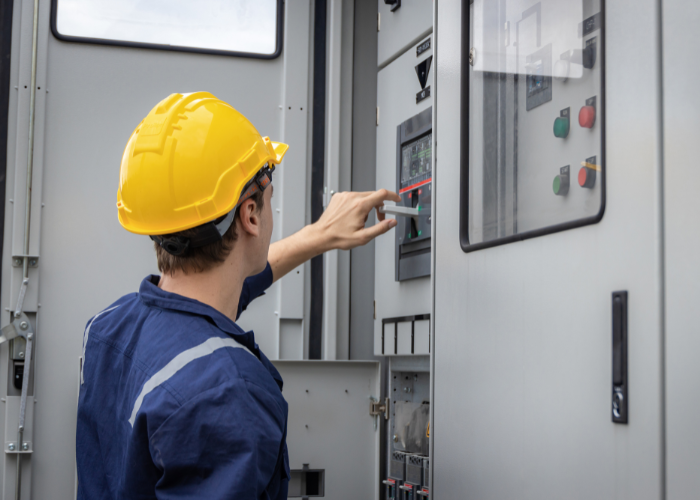
These are three different conversations and we will tell you honestly which one you are in.
If the branch tests clean and the circuit breaker is the problem, a new breaker of the correct type and rating goes in, torqued to spec, and you are done in under an hour. Straightforward, affordable, and the right answer more often than people expect.
If the fault lives in the wiring, swapping hardware changes nothing. We isolate the run, find the damage, and make the repair at the point of failure with the conductors properly terminated inside an accessible enclosure.
When the electrical panel is full, the bus is damaged, the equipment is obsolete, or the service simply cannot carry what your household now demands, a panel upgrade becomes the honest recommendation. Adding a subpanel beside the existing gear is often the more cost effective route, and we will price both so you can choose with real numbers in front of you.
We do not sell a service upgrade to solve a twelve dollar problem, and we do not patch a failing enclosure because it is the cheaper invoice today. You get the actual condition of your electrical system, then you decide.
Certain equipment has a safety track record, and you deserve to hear about it from someone who is not guessing.
Federal Pacific Stab-Lok. Widely documented failure to trip under fault conditions. Replacement is the accepted remedy, not repair.
Zinsco and Sylvania Zinsco. Aluminum bus that can weld itself to the breaker clip. The handle moves, the connection does not open.
Challenger and Pushmatic. Discontinued lines where sourcing a matching circuit breaker gets harder and more expensive every year, which turns a simple replacement into a scavenger hunt.
Overstuffed enclosures. Tandem circuit breakers crammed into slots the panel was never rated for, double tapped lugs, and neutrals doubled under a single screw. All common, all correctable.
If you have one of these in a Pleasant Grove garage or an Orem basement, that does not mean panic. It means plan. We will document what you have, tell you what your options cost, and let you set the timeline.
A circuit is only as sound as its worst connection. When we trace a persistent trip back into the walls, this is the short list of what we find in Utah County houses and buildings.
Aluminum branch conductors. Standard in a stretch of construction from the mid 1960s into the early 1970s. It expands, contracts and oxidizes differently than copper, so it needs listed connectors and correct terminations at every point.
Knob and tube and cloth insulated cable. Still present in older homes near downtown Provo, Springville and Payson. Insulation that has gone brittle sheds when disturbed, and buried splices with no enclosure are a fire waiting for a reason.
Undersized conductors on upsized breakers. Somebody had a nuisance trip and installed a twenty amp breaker on fourteen gauge wire. The trips stopped. The protection stopped too.
Damaged cable. Drywall screws, deck ledger lags, rodents in a crawl space, and cable stapled hard enough to crush the insulation during the original build.
Buried and abandoned junctions. Splices sealed inside a wall or above a finished ceiling with no access. Every one of them is a future service call, and code exists to prevent exactly this.
Basement and garage additions. A finished basement in Highland or a converted shop in Spanish Fork where the wiring grew organically over three owners, none of whom pulled a permit.
We repair what can be repaired and rerun what cannot, and every splice we leave behind is in an accessible box, properly terminated and labeled.
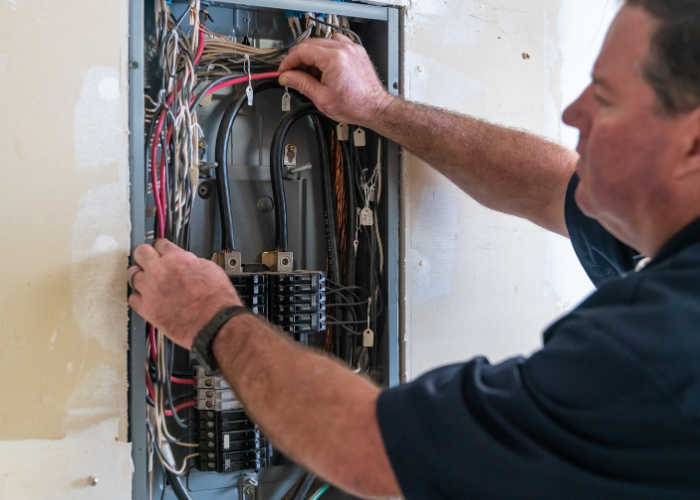
Step one is the interview. What is on the branch, what changed recently, what is the pattern. A trip that happens only on a hot afternoon points somewhere very different than one that happens the moment you flip a switch.
Then we measure. Clamp readings under real load, voltage drop across the terminations, insulation resistance where the run is suspect, and a thermal scan of the enclosure while it is energized. Numbers, not hunches. That is what professional diagnosis looks like.
Then we isolate. We break the branch into segments and test each one until the fault has nowhere left to hide. This is the part that takes patience, and it is the part most often skipped by whoever was here before us.
Then we fix it and prove it. Repair, retest under load, verify the breaker holds where it should and opens when it must, and label the electrical panel so the next person is not guessing either. Power back on, and back on for good.
Most residential calls are handled in a single visit. Larger jobs get scheduled around your day, and commercial work gets scheduled around your hours so your business keeps running.
Once we are already in the electrical panel, adding capacity is usually the cheapest it will ever be. Plenty of our breaker calls turn into a short list of things a homeowner has been putting off, and most of that list is straight installation rather than troubleshooting.
Same crew, same standard, and one trip instead of three.
A tripping breaker in a Lehi home and a nuisance trip on a three phase motor at a shop off Geneva Road are not the same job, and we staff for both. On the residential side that means panels, branch circuits, remodel rough in and safety inspections. On the commercial side it means tenant buildouts, lighting retrofits and fixture installation, motor controls and preventive schedules that catch a failing component before it takes a production line down.
What stays the same is the approach, and so does the standard. Test first, explain clearly, price honestly, and leave the electrical system in better shape than the standard the last person set.
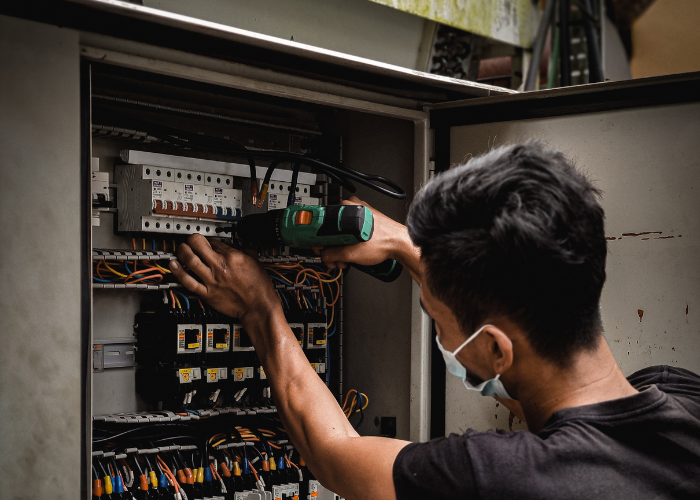
Our shop is on 600 West in Pleasant Grove, which puts most of the county inside a comfortable drive.
Home base. We know the older grid near Discovery Park and the historic downtown blocks, the ranches and split entries built through the seventies and eighties, the businesses in the Valley Grove development along Pleasant Grove Boulevard, and the new construction pushing west. In a city with this much housing turnover, the most common problems we see are original panels running finished basements, hot tubs and EV chargers they were never sized for.
Lehi, American Fork, Highland, Alpine, Cedar Hills and Lindon. That covers the old grid around the Lehi Roller Mills and the tech buildings off Ashton Boulevard, the blocks near the hospital and Fox Hollow in American Fork, the neighborhoods along Timpanogos Highway in Highland, Alpine Cove and the properties out Grove Drive, the streets off Cedar Hills Drive backing the Murdock Canal Trail, and the shops and orchard era houses in Lindon. Big square footage on the benches means long branch runs, heavy loads, and panels that fill up fast.
Provo brings the Franklin and Dixon neighborhoods, Slate Canyon, the rentals near Center Street and the busy blocks around Provo Towne Centre, where six students and one fifteen amp branch make for interesting evenings. Orem brings Scera Park, Northridge and the businesses along State Street, much of it built in an era when two bedrooms and a television counted as a full load. Vineyard is the opposite problem, with new mixed use blocks along Mill Road and townhome rows near the Megaplex where warranty era defects and arc fault nuisance trips are the calls we get.
Springville, Mapleton, Spanish Fork, Salem, Payson, Santaquin, Elk Ridge and Woodland Hills. That means the west side industrial buildings off the Springville interchange and the houses along Spring Creek, the orchards on 1200 West and the east bench builds in Mapleton, the Sports Park area and Expressway Lane businesses in Spanish Fork, the newer subdivisions and the older places along SR-198 in Salem, Memorial Park and the brick around Utah Avenue in Payson, the packing sheds and cold storage near the highway in Santaquin, the hillside lots up Goosenest Drive in Elk Ridge, and the switchback roads above Woodland Hills where a service drop takes real wind and winter power outages are a fact of life.
Saratoga Springs and Eagle Mountain, from the marina and the Israel Canyon climb to the newer phases off Foothill Boulevard, and from the data center corridor on the north end of Eagle Mountain to the long runs out along Eagle Mountain Boulevard. Newer housing stock, but volume building leaves its own signature, and we see plenty of loose terminations and undersized branches in houses barely out of warranty.
Genola, Goshen, Cedar Fort, Fairfield, and the pockets at Benjamin, Lake Shore, West Mountain, Spring Lake, Elberta and Birdseye, plus the Utah County side of Draper up on the ridge and the cabins toward Sundance. Grain buildings, irrigation and well pumps, ranch shops along SR-73 out toward the old Pony Express route, and service equipment that has been out in the weather since the Carter administration. We make the drive.
Power loss stops being a routine part of your week. A branch that has been dropping for two years is a problem with a cause, and causes can be removed.
Fire risk goes down measurably. Loose terminations, overheated bus connections and unprotected splices are the failures that show up in fire reports, and correcting them is the cheapest safety improvement in the building.
Your electrical system regains its full functionality. Circuits that carry what they were designed to carry, protection that operates when it should, and capacity to add what you want next.
The work is documented. Labeled panel, permits where required, and a written record of what was found and what was done, which matters when you sell.
A licensed electrician stands behind it. Silver Star Electric is veteran owned and has been serving Utah since 2008. Free consultations, in person or virtual, with a quote back to you inside 24 to 48 hours on planned work.
Because something on that branch runs on a schedule. Well pumps, water heaters on timers, irrigation controllers, block heaters and HVAC cycles all show up this way. The pattern is the clue, and it usually leads us straight to the load that pushes the circuit over the edge.
No, and this is the single most dangerous shortcut in residential electrical work. The breaker protects the wire, not the appliance. Putting a larger one on existing conductors removes the protection while leaving the hazard, and it is exactly how walls catch fire. The right answer is either reducing the load or adding a properly sized circuit.
A straightforward swap on an accessible panel is usually under an hour, including testing. Tracing an intermittent fault through a finished basement can take a good part of a day. We give you a scope and a price before we start so there are no surprises either way.
Slight warmth under heavy load can be. Hot to the touch is not, and a hot breaker with a discolored handle needs attention now. Heat means resistance somewhere in the connection, and resistance in an energized enclosure only gets worse.
Panel and service work generally requires a permit and inspection in Utah County jurisdictions. We handle that as part of the job. A professional outfit pulls the permit. Anyone offering to skip it is telling you something important about how they operate.
It depends on why. An overload you can identify and unplug is not an emergency. A breaker that trips instantly, will not reset, feels hot, smells like burning plastic or is attached to a panel with a known failure history should be treated as urgent, and we keep availability for exactly those calls. Losing power in one room is an inconvenience. Losing protection is a hazard.
Whether it is one branch that keeps dropping, a panel you have been eyeing nervously for years, or a building that needs a real assessment, we will diagnose it properly and price it honestly before anything gets touched.