
Licensed electricians, not a door knocking sales operation
Solar is an electrical project with panels on top. We design it around your roof, your panel and your actual usage, then install, commission and stand behind it.
Most of what goes wrong with residential solar is not the solar panels. Modern solar panels are durable and boring in the best way, and they will outlast the roof under them. The failures show up in the parts an electrician owns. Undersized conductors, a main breaker and busbar that will not legally accept the backfeed, sloppy roof penetrations, rapid shutdown that was never commissioned properly, and an interconnection that sat waiting on paperwork nobody submitted.
That is the difference between us and a solar company built around a sales team. We have been doing electrical work across Utah County since 2008. We were licensed electricians long before we ever set a rail, and the electrical side of a solar system is exactly where the money and the risk live.
We will also tell you when the answer is no. If your roof has six years left, if the shade is bad enough, if your usage does not justify the equipment, you will hear it. A quote you can trust includes the projects we talk people out of.

A complete solar panel installation runs in a set order, and skipping a step is how projects go sideways.
Roof orientation, pitch, age and remaining life, plus a real shade study. In Utah County that matters more than people expect. A house on the east bench in Alpine or Pleasant Grove sits in the shadow of Timpanogos until mid morning in the winter, and shade from a single mature tree can cost more production than better equipment will ever recover.
Twelve months of your actual bills, not an average pulled off a chart. We size to your energy needs, including whatever is coming next, like an EV or a heat pump.
Solar panel layout, string design, inverter selection, rapid shutdown compliance, conduit routing and where the equipment lands. A clean solar array is designed around obstructions and fire setbacks, not squeezed to hit a sales number.
Roof structure carries the array plus Utah snow load. If the framing needs blocking or reinforcement, we say so before anything is ordered.
Where the solar power lands, what the main breaker and busbar will accept, whether a line side tap or a panel change is required.
Building and electrical permits, plan review, inspection, and the utility interconnection application. Every city in the county runs this slightly differently and we know which is which.
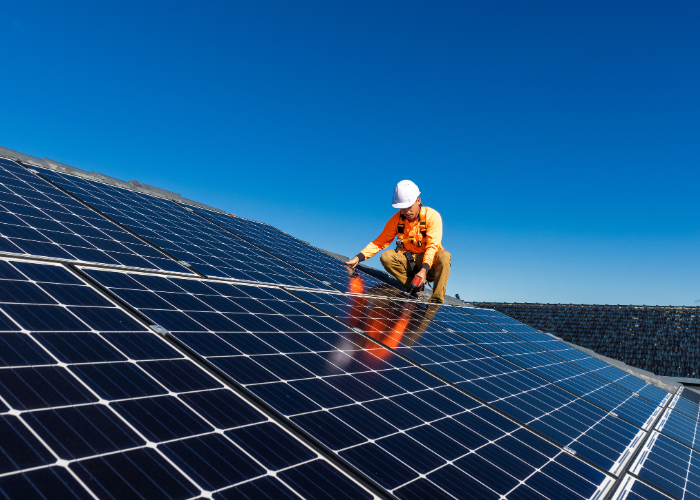
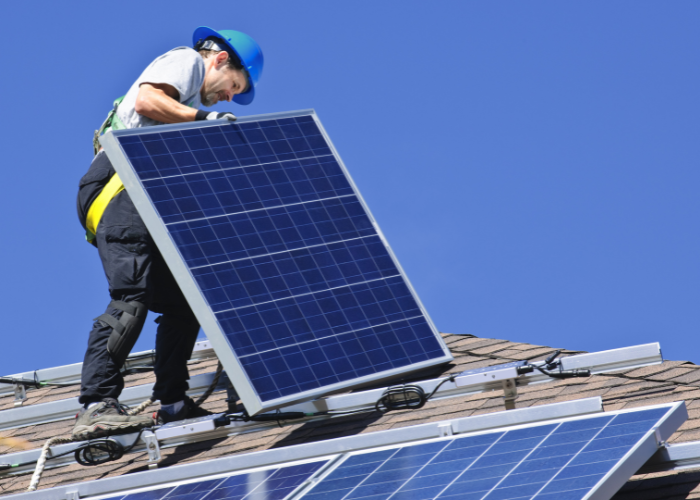
Mounts, flashing, rails, solar panels, conduit, inverters and disconnects. The installation itself is the short part, done by people who will still be here in a decade.
Testing, monitoring setup, utility sign off, and a walkthrough so you know what you are looking at in the app.
It helps to know what you are buying.
A solar installation converts sunlight into direct current electricity. An inverter turns that into the alternating current electricity your house runs on, and it feeds into your electrical service exactly like utility power does. Your appliances cannot tell the difference and nothing in the house has to change.
When the solar panels make more power than you are using, the extra flows backward to the meter. When they make less, at night or under heavy cloud, you draw normal utility power without noticing the handoff. That constant back and forth is why solar installation is judged over a year rather than a day.
Three things determine how much power a solar panel system produces here. How much roof faces the right direction, how much shade crosses it during the day, and how efficiently the equipment converts what it receives. A good solar company optimizes all three. A bad one sells panel count.
A solar panel system is a thirty year piece of equipment bolted to something with a shorter lifespan. That order of operations gets ignored constantly.
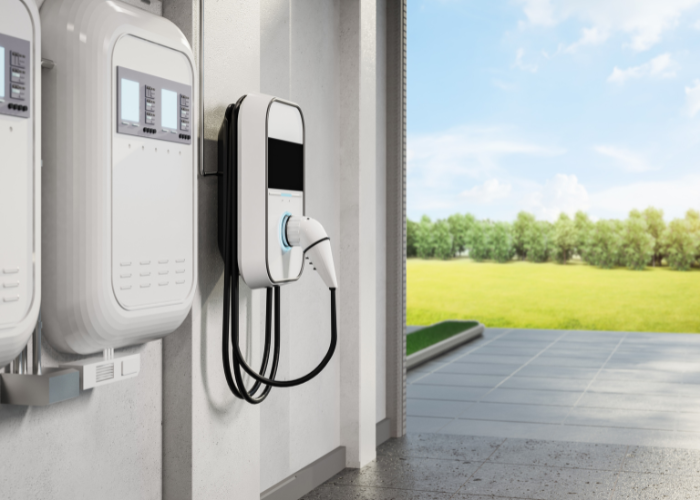
Solar panels alone go dark when the grid does. Most people do not learn that until the first outage after their solar panels went in, because the inverter is required to stop exporting power when the utility drops.
Battery storage changes that. A properly configured battery and a critical loads panel keep the refrigerator, the furnace fan, the well pump, the internet and the lights running when the utility grid is down, and it charges back up the next day from the sun.
This is where solar projects stall, and it is the part a sales rep usually cannot answer.
Solar panel installation cost is driven by a short list of variables, and any solar company that quotes you before looking at these is guessing.
Installation costs get itemized and put in front of you with the assumptions written down. No lease pitch, no financing shell game, no urgency about a rebate that expires Friday.
Commercial projects run on different math. Demand charges, three phase equipment, roof access and structural capacity all matter more, and a commercial solar system is usually sized against a load profile rather than a monthly bill.
We handle flat roof ballasted and attached systems, carport structures, ground mount arrays, and the switchgear coordination that goes with them. Warehouses along Geneva Road, shops in Spanish Fork, and office buildings on the north end are all reasonable candidates, especially where daytime usage lines up with peak solar power. A commercial solar system is also easier to expand later if the first phase performs.
If your business is carrying rising energy costs and a big daytime load, the numbers tend to work better than they do on a house.
The solar industry in Utah has had a lot of turnover. Companies sold aggressively, installed quickly and closed. If the solar company that sold you the system is gone and your original solar installer is out of business, you are not stuck. Plenty of solar installers left the state entirely, and their customers still need somebody.
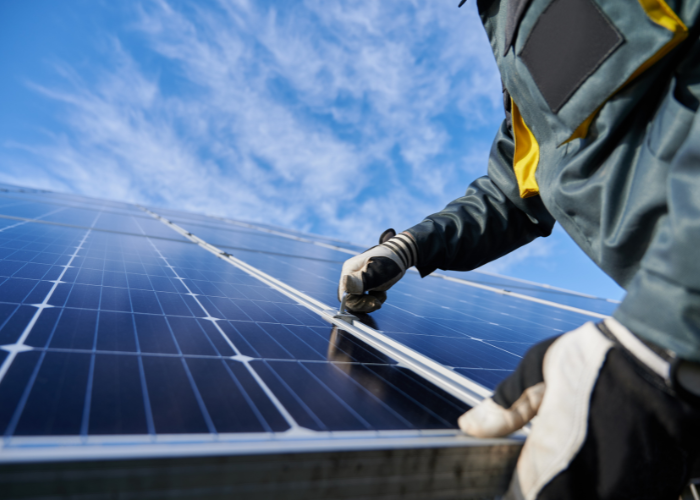
We service and repair systems we did not install. Inverter faults and replacements, production that dropped off a cliff, monitoring that stopped reporting, rapid shutdown issues, damaged conduit, animal intrusion under the array, and roof leaks around mounts that were never flashed properly. We will diagnose it, tell you what it needs, and fix it.
Being a local installer means the maintenance conversation is a phone call rather than a hold queue in another state. We handle warranty coordination, monitoring checks and the routine maintenance that keeps production where it belongs.
Our shop is at 320 N 600 W in Pleasant Grove and we install throughout the county.
North end. Pleasant Grove, American Fork, Lehi, Highland, Alpine, Cedar Hills and Lindon. Larger houses on the benches, real wind exposure, and morning shading off the mountain that has to be modeled honestly.
Provo, Orem and Vineyard. Older roofs and older panels in the established neighborhoods, plus newer construction in Vineyard with clean roof planes. Provo and Lehi both run their own municipal utilities, which changes the interconnection path.
South county. Springville, Mapleton, Spanish Fork, Salem, Payson, Santaquin, Elk Ridge and Woodland Hills. Bigger lots, outbuildings, ground mount options, and several cities with municipal electric service.
West side. Saratoga Springs and Eagle Mountain, where newer roofs, simple planes and wide open exposure make some of the best residential candidates in the valley.
Rural and unincorporated. Genola, Goshen, Cedar Fort, Fairfield, Benjamin, Lake Shore, West Mountain, Spring Lake, Elberta, Birdseye, the Utah County side of Draper and the properties toward Sundance. Well pumps, shops, long service runs and off grid adjacent situations where battery storage does the heavy lifting.
Often yes. We get a lot of sun, and rooftop solar energy production here is strong through most of the year. Whether solar power works for you depends on your usage, your roof and your utility, which is why we look at all three before saying anything definitive.
It goes down, not away. You will still have a utility bill for connection charges and any usage the system does not cover, and winter electric bills lean on the grid more than summer ones do.
Yes. Snow slides off tilted solar panels faster than people expect, and cold clear days are efficient for solar energy. Production dips while panels are covered, which the annual model accounts for.
Very little. Rinse them if they get dusty, keep an eye on the monitoring, and expect an inverter to need attention somewhere in the middle of the system's life. That is most of it.
We install solar systems people own. Leases and power purchase agreements can complicate a home sale and often deliver less value over time. If someone is pushing hard on financing rather than the equipment, that tells you what they are selling.
It is one of the more effective ones available to a homeowner, and clean energy that also lowers your energy bills is a rare combination. If renewable energy is a priority for your household, we will build to your energy goals rather than a template.
Design and permitting usually take longer than the installation itself. Most residential jobs are on the roof for a few days. The waiting is in plan review and utility approval.
Real numbers, a real shading study, and a straight answer about whether solar panels make sense on your house or building. Silver Star Electric has served Utah County since 2008, licensed, insured and veteran owned.